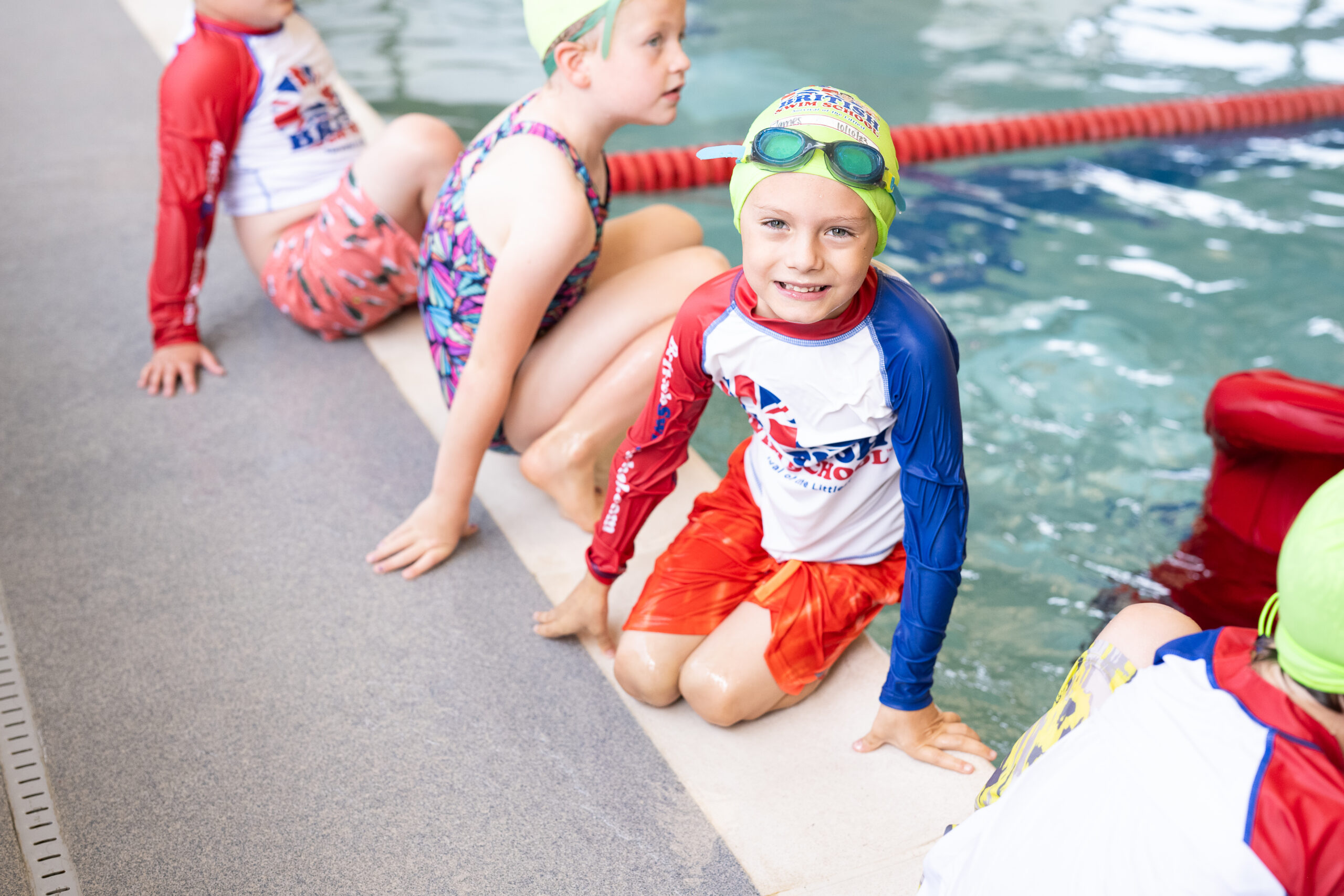
The best time to start swim lessons is earlier than most parents think–because early exposure builds the safety habits, confidence, and instincts that protect children long before they face real-world water risks. Knowing when to start swim lessons is one of the most important decisions you can make for your child’s long-term safety and confidence around water.
While many families wait until age 4, pediatric experts and drowning-prevention organizations now recommend introducing water safety skills much earlier.
At British Swim School, we welcome infants as young as 3 months old, giving families a gentle, safety-first start that helps children grow confident instead of fearful.
This guide breaks down why starting swimming lessons early matters, the best age for swim lessons, readiness signs, and age-specific program recommendations, so you can make the safest, most informed choice for your child.
Why Start Swim Lessons Early? Water Safety & Drowning Prevention
Starting swimming lessons early builds foundational water safety skills that help prevent childhood drowning.
Drowning is the leading cause of death for children ages 1–4 in the U.S. (Source: CDC.gov)
As parents, you worry about the safety of your little ones. You buy the safest car seats. You monitor their crib at night. You child-lock your cabinets and doors. How often is water safety at the top of your list?
Somehow, the risk of drowning often flies under the radar, despite it being the biggest threat to young children.
Thankfully, you can drastically reduce that risk by starting swim lessons early.
Formal swim lessons can reduce drowning risk by up to 88% for children ages 1-4 (Source: NIH.gov Study)
Early swim lessons do more than just acclimate your child to the water. They teach the instincts and skills that may save your child’s life in an unexpected water emergency–something supervision alone can’t provide. This includes:
- Respect for water
- Essential water-survival skills
- Reduced fear and anxiety
- Faster skill progression
- Confidence around pools, lakes, and beaches
You don’t have to wait until your child is four or five to see the benefits. If you’re wondering how early to start swim lessons, know that even babies and toddlers can learn water safety skills that can save their lives.
Ready to give your child a safer, stronger start? Find a class near you.
Best Age to Start Swim Lessons
Infants (3–12 Months): Water Acclimation & Parent Participation
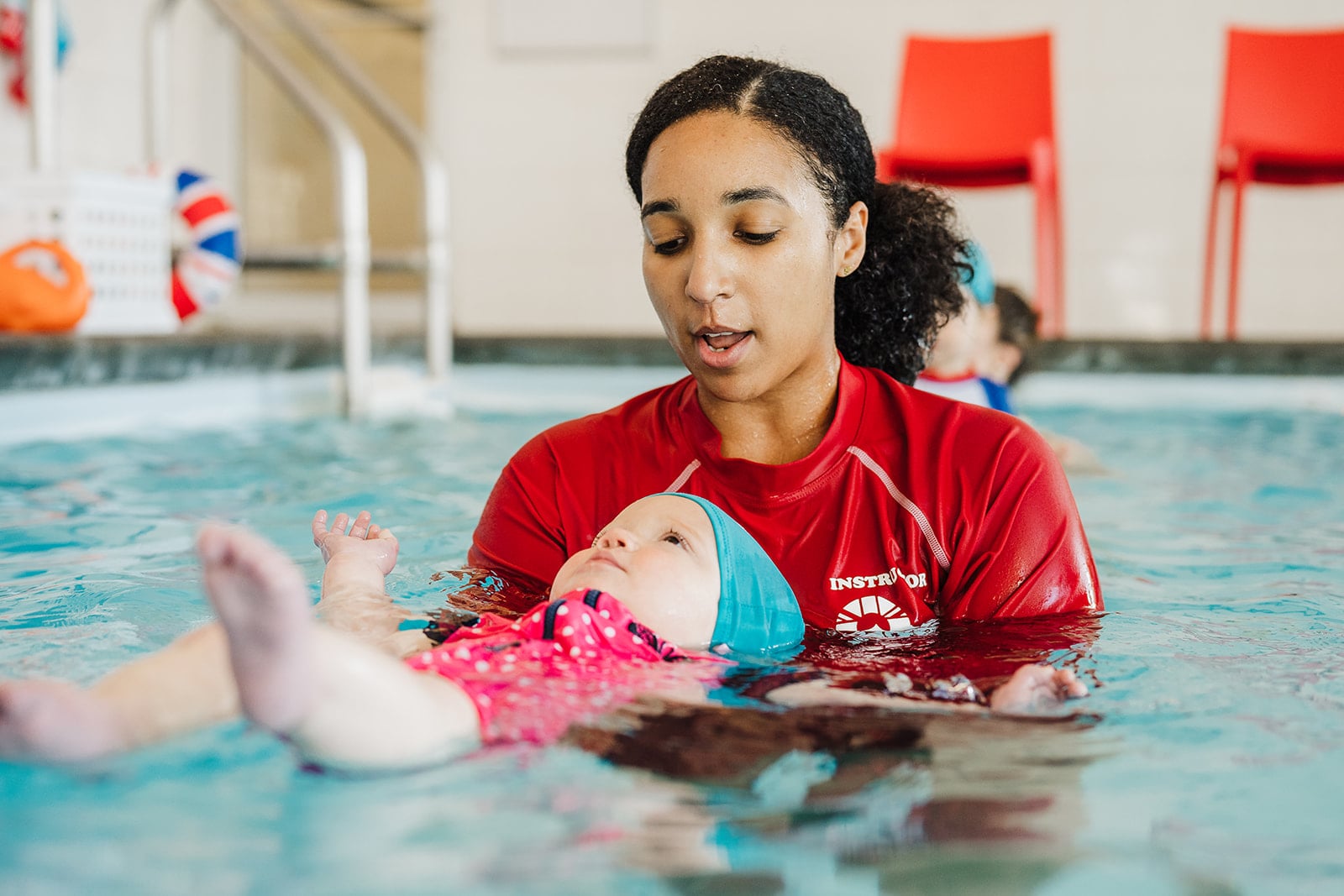
Infant and baby swim lessons are not focused on actually learning how to swim or being independent in the water. (Don’t worry, we aren’t throwing babies in the pool to see if they float!) Instead, we’re helping parents and their little ones get comfortable and bond together in the water.
Baby swim lessons should focus on:
- Water comfort and sensory introduction
- Safe holds and gentle submersion techniques for parents
- Floating support
- Learning to enjoy water rather than fear it
While most national swim programs wait until 6 months old, here at British Swim School, we offer lessons starting at 3 months old. It’s the perfect age to capitalize on the developmental stage when babies are excited and open to new sensory experiences–and have an instinctive breath control reflex that makes them easier to teach. Our gentle approach allows them to discover and gain comfort in the water before they can move independently.
What to Look For in Baby Swim Lessons
For baby and infant swim lessons, choose “mommy-and-me” type programs that focus on parent participation and water safety, not technique or learning to swim.
Toddlers (1–3 Years): Foundational Water Safety Skills
Age 1-3 is a crucial time for drowning prevention, because toddlers are highly mobile but don’t have the awareness or coordination to be safe around water. Parental vigilance is not enough. If a toddler falls into the water at this age, their own water survival skills are the most important line of defense.
At this stage, swim lessons should increasingly include:
- Assisted or independent back floating
- Basic rescue techniques like rolling over to float
- Safe entry and exit
- Breath control
- Purposeful movement
The American Academy of Pediatrics recommends starting swimming lessons at age 1 as a layer of protection against drowning. This aligns perfectly with British Swim School’s structured survival-based swim programs. We offer swim lessons specifically designed for toddlers under 3 that teach water safety first.
Additionally, students who start swim lessons before age 3 often learn to swim independently sooner than those who begin at preschool age.
What to Look For in Toddler Swim Lessons
When searching for swim lessons for toddlers under 3 years old, select beginner programs that prioritize floating and water survival skills.
Preschoolers (3–5 Years): Independence & Skill Building
Preschoolers are developmentally ready to follow instructions and learn independent water survival skills, making this a prime age for fast progress. But that all relies on building a foundation of comfort in the water and core water safety skills.
By ages 3–5, swimmers can typically:
- Float independently
- Safely jump in and exit the water
- Glide
- Kick correctly
- Use beginner strokes
Around age 4 is when many parents begin swim lessons, but starting earlier puts students ahead of the curve.
If your child is already 5 years old and you haven’t started swim lessons yet, don’t worry. Our swim lessons for kids cover every age and stage. Whether they’re brand new to the water or developing their swimming skills, we help create safe, happy, confident swimmers.
What to Look For in Swim Lessons for Preschoolers
Choose swim lessons for your 3-5-year-old that focus on water safety skills and independence. If your child is new to swimming, also look for programs that cater to first-time swimmers who may be nervous around the water.
Ages 6+: Stroke Development & Confidence
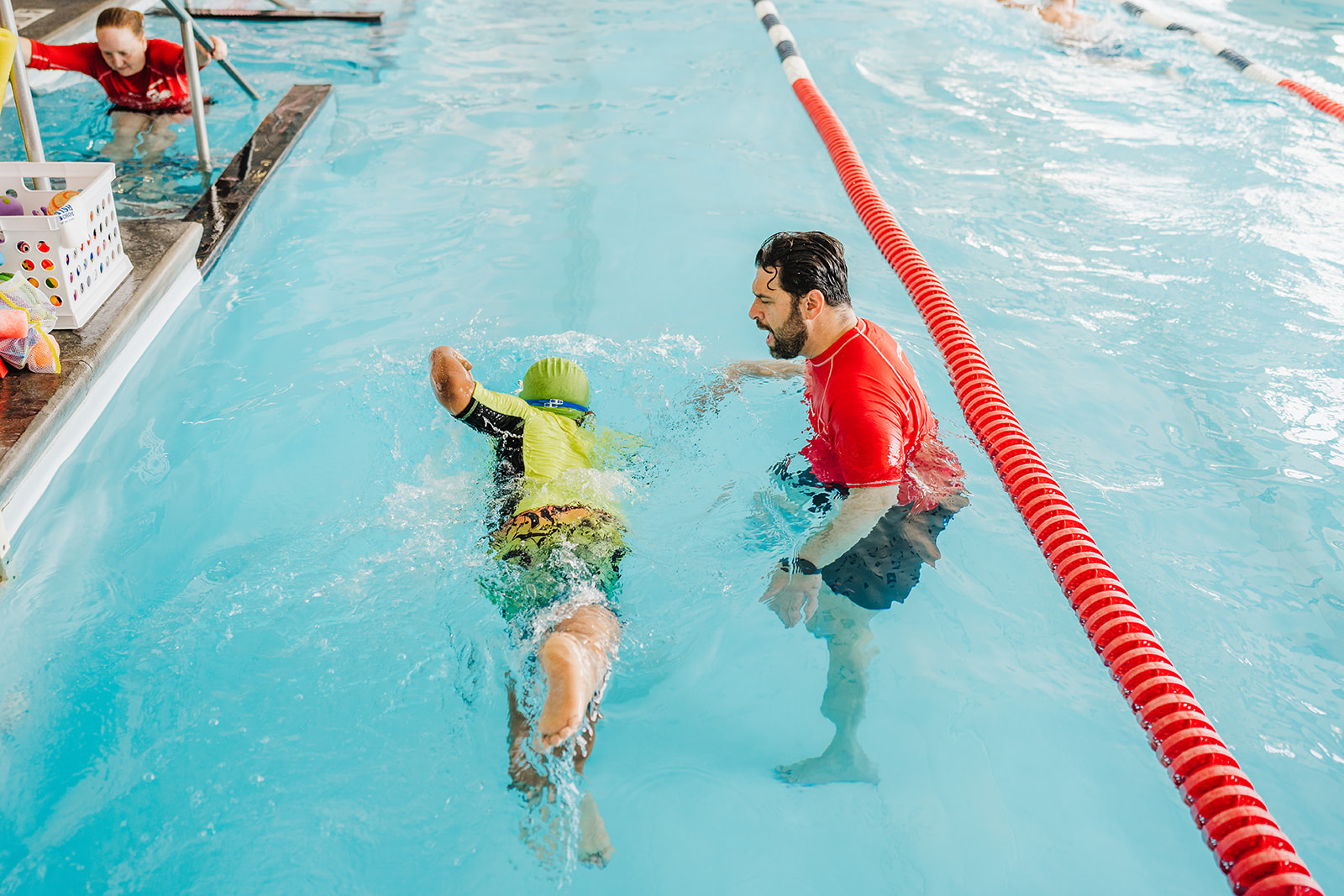
The advantage of starting swim lessons later is that older kids often learn quickly. They are more physically coordinated and have better listening skills, which helps them progress faster than younger students.
Any swim lesson for kids should still start with a foundation of water safety, but can also develop more complex swim skills.
These swim lessons usually focus on:
- Reinforcing core survival skills
- Introducing stroke skills
- Longer distances
- Side breathing
- Confidence and endurance
Keep in mind, if your child is brand new to swim lessons, they will need to establish basic skills before progressing to independent swimming or strokes. Even if your child is older, it’s never too late to start swimming lessons.
At British Swim School, we help kids of all ages and stages go from first splashes to confident strokes. Check out our range of swim programs to find which one is right for you.
What to Look For in Swim Lessons for Kids 6+:
Enroll kids ages 6+ in programs that teach water safety first, but advance toward stroke mechanics and swimming proficiency.
Find the Right Swim Lessons for Your Kids – Take Our Swim Assessment
Developmental Signs Your Child Is Ready to Start Swim Lessons
While age provides a general guideline for when to start swim lessons, every child is different. Rather than asking the best age to start swim lessons, think about the developmental milestones your child needs to succeed in developing different swim skills.
For infants, this includes being able to hold their head up, being alert, and showing interest in sensory experiences.
As babies and toddlers grow, look for mobility signs like crawling or walking, gross motor skills such as balancing or kicking, and the ability to understand basic commands.
For preschoolers and older children, the willingness to be independent from a caregiver is key. Increased balance, physical coordination, and the ability to learn sequences also help kids develop more complex swim skills.
If your child has developmental differences or special needs, they can still learn to swim! Our Dolphin program at British Swim School offers personalized lessons for swimmers with autism or special abilities.
Recommended Ages and Developmental Milestones for Starting Swim Lessons
Finding the right swim lessons for your child can feel overwhelming, especially when every age comes with different developmental needs and water safety goals. The table below provides a simple, at-a-glance guide to recommended swim skills by age and the British Swim School programs designed to support each step of your child’s swim journey.
| Age Range | Developmental Milestones | Recommended Skills | British Swim School Program |
| 3–12 months | Sensory awareness, head control, bonding with caregiver | Water acclimation, floating with support, gentle submersion, rolling to back | Tadpole / Swimboree |
| 1–3 years | Mobility/walking, basic coordination, following simple commands | Assisted or independent floating, rolling to back, safe entry/exit, breath control, beginning independence | Swimboree / Seahorse |
| 3–5 years | Stronger coordination, independence, ability to learn sequences | Independent floating, gliding, rolling, beginner strokes | Starfish / Minnow / Turtle 1 |
| 6+ years | Advanced motor skills, greater physical control | Reliable water survival, stroke development, endurance | Turtle 1 / Turtle 2 |
At British Swim School, we support swimmers at any age, any stage. That includes additional programs for swim team and even adult lessons.
Still not sure which swim program is right for you?
Take our Swim Assessment to find swim lessons near you that fit your needs.
FAQs About When to Start Swim Lessons
Can babies really begin swim lessons at 3 months?
Yes, babies can safely begin swim lessons at 3 months when classes are designed for infants and taught by trained instructors. In fact, young infants have an instinctive breath control reflex that makes them easier to teach! The goal at this age is not to learn to swim. Early lessons focus on gentle water acclimation, parent participation, comfort, and basic floating support, helping infants build familiarity and positive associations with water from the very beginning.
Do swim lessons prevent drowning?
Studies show that formal swim lessons reduce the risk of drowning by up to 88% for children ages 1–4. However, swim lessons alone are not enough. Parents should still maintain active supervision, use barriers around water, and follow broader water-safety practices.
What if my child is afraid of water?
A child who is afraid of water can still learn to swim with patient, supportive instruction tailored to their comfort level. Swim lessons that introduce skills gradually and build confidence step by step often help children overcome fear. Starting early can also prevent anxiety from developing in the first place.
Is it ever too late to learn to swim?
It’s never too late to learn to swim! Beginners of any age can benefit from structured, confidence-building lessons. From infants to children to adults, learning to swim improves safety, increases comfort in and around the water, and supports long-term confidence and skill development. Learning to swim as a parent can also help you be more confident in the water with your children, which you can then pass on to them.
The Best Age to Start Swim Lessons
So, when should you start swim lessons?
While traditional guidance suggested waiting until age 4, current evidence and drowning-prevention research highlight the benefits of starting much earlier.
Families searching for swim lessons near Pottstown or Collegeville, PA can begin as early as 3 months through British Swim School’s year-round indoor programs.
With programs beginning at 3 months, British Swim School gives children the earliest—and safest—head start in the water. If you’re looking for swim lessons near Pottstown, PA, or Collegeville, PA, check out our year-round indoor programs!
Ultimately, there’s no “right” or “wrong” age to start swim lessons. (The only “wrong” time is never!) Whether your child is an infant, toddler, preschooler, or older, the most important thing is to start now, build confidence, and make water safety a lifelong priority.
Ready to begin? Enroll in Swim Lessons in Pottstown, PA, or Collegeville, PA today!