Drowning is a topic no parent wants to dwell on, but understanding the realities of water safety is the single best way to protect our children.
Many people assume drowning looks like it does in movies—splashing, waving arms, and loud cries for help. In reality, real-life drowning is almost always silent and rapid. It can happen in as little as 20 to 60 seconds, often while adults are nearby and believing everything is fine.
The Numbers Every Parent Should Know
According to the Centers for Disease Control and Prevention (CDC):
- Drowning remains the leading cause of accidental death for children ages 1 to 4.
- It is the second leading cause of unintentional injury death for children ages 5 to 14 (behind motor vehicle crashes).
While supervision is always the first line of defense, life is full of unpredictable moments—a gate left unlatched, a distraction during a backyard barbecue, or a quick slip off a dock.
Survival Skills: The Ultimate Safety Net
The good news is that formal swim lessons dramatically reduce this risk. Research published by the National Institutes of Health (NIH) shows that participation in formal swim lessons can reduce the risk of drowning by up to 88% in children ages 1 to 4.
At British Swim School of North Colorado Springs-Douglas County, we start with survival skills first. Before teaching proper stroke technique, we teach children how to:
- Safely enter and exit the pool.
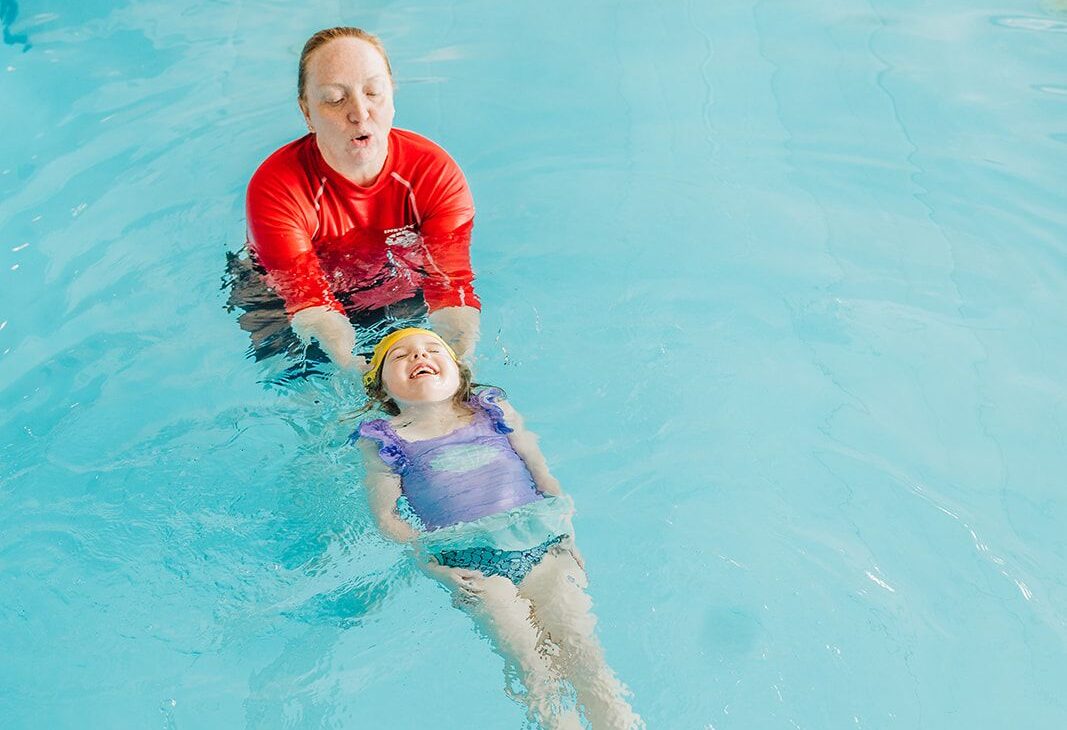
- Roll onto their back to rest and breathe (roll-to-float).
- Maintain a stable float until assistance arrives.
These basic self-rescue behaviors provide a vital safety net when unexpected accidents happen.
Give your family peace of mind around water. Enroll your child in our survival-first swim program today.
- References:
- Centers for Disease Control and Prevention (CDC) — Drowning Data and Statistics.
- National Institutes of Health (NIH) / Archives of Pediatrics & Adolescent Medicine — Association Between Swimming Lessons and Drowning in Childhood.